• Played a key role in executing divisional programs by managing core administrative and on-site operational tasks, successfully delivering a new entrepreneurship concept titled "Craft a Good Coffee & Art of Latte".
• Met target engagement metrics by driving awareness and attendance, successfully securing 40+ participants for the interactive workshop.
• Coordinated guest speaker and barista logistics while providing dedicated on-site support, ensuring seamless program delivery and an engaging attendee experience.
• Evaluated 7 organizational programs, optimizing execution schedules and setting performance benchmarks that achieved an impressive average program performance rating of 93.5/100.
• Facilitated monthly THA reviews for 18 members to track performance, boost morale, and optimize team dynamics, achieving an outstanding average division health rating of 4.8/5.0.
• Spearheaded the creation and finalization of 7 program standardization manuals, establishing clear execution benchmarks and operational SOPs to serve as a reference guide for future terms.
• Designed and developed the conceptual framework for the unmanned vehicle, ensuring alignment with project objectives and technical specifications.
• Collaborated with cross-functional teams to integrate various subsystems and optimize overall performance.
• Conducted feasibility studies and prototyping to validate design concepts and identify potential improvements.
• Facilitate class sessions for Material Science, ensuring continuity of learning for students during the lecturer's absence.
• Supported students by clarifying lecture, answering questions, and providing additional guidance to enhance their understanding of the course material.
• Prepared and set up laboratory equipment for practicum sessions, specifically for the 'Direct Linear Motion' and 'Friction' modules.
• Guided students through experimental procedures, ensuring adherence to safety protocols and providing technical assistance to facilitate their learning.
• Graded and provided constructive feedback on student lab reports, evaluating their data analysis, methodology, and conclusions.
• Drafted comprehensive Lines Plans, General Arrangements (GA), and Profile Construction drawings for a 38-feet leisure boat using AutoCAD.
• Designed parametric hull forms and conducted stability and hydrostatic analysis using Maxsurf to optimize vessel performance and compliance.
• Created high-detail 3D surface models using Rhinoceros to visualize complex hull curvature and components for production readiness.
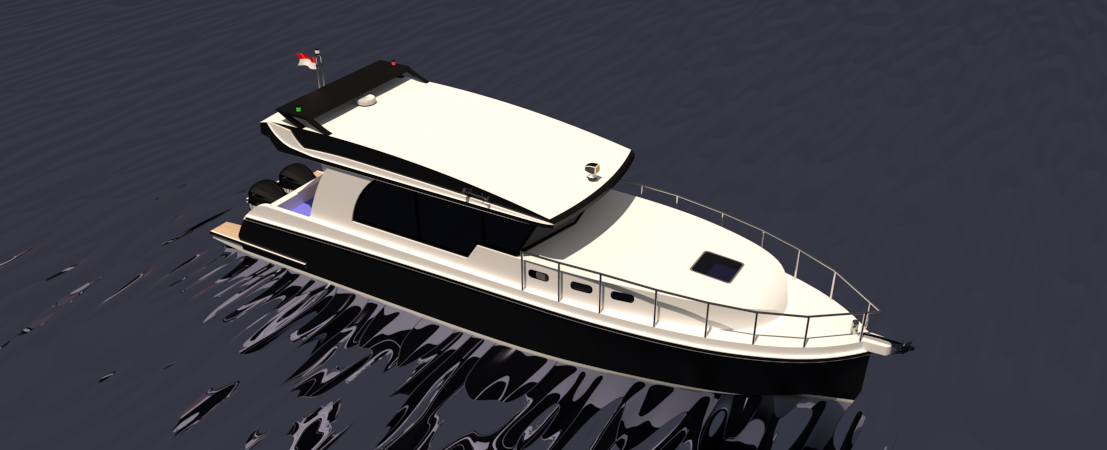
During my internship at Teluk Naga Bahari Shipyard, I designed a 38ft leisure boat from concept to analysis, executing 3D hull modeling, structural calculations, and hydrodynamic simulations. I later expanded this empirical dataset for my research, developing 10 distinct step-hull variations featuring different step placements and counts to systematically evaluate and optimize hull hydrodynamics and performance.
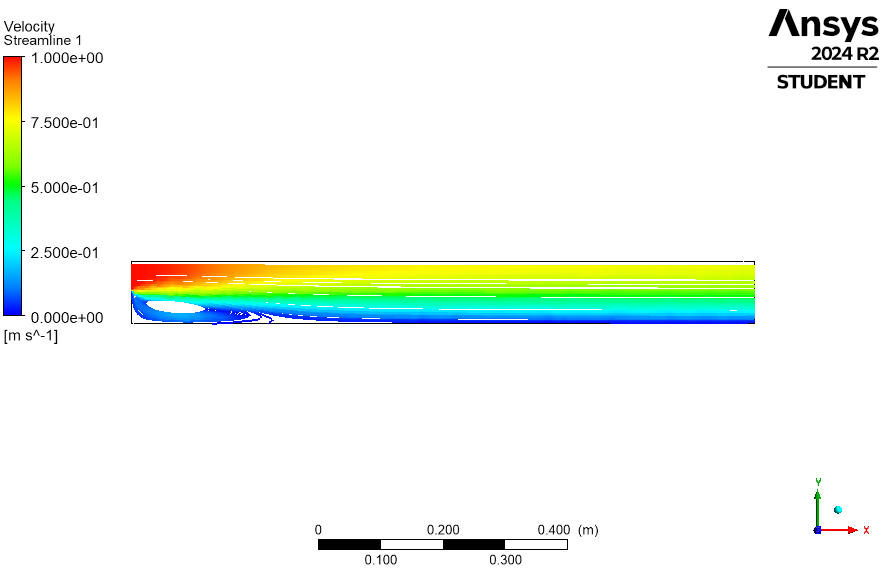
Through coursework in Computational Fluid Dynamics (CFD), I gained practical experience in modeling, meshing, and analyzing various fluid phenomena. My coursework encompassed foundational benchmark cases such as lid-driven cavity, backward-facing step, channel flow, and flow over a circular tube as well as complex industrial applications including static mixer and aerodynamic performance analysis of Vertical Axis Wind Turbines (VAWT).
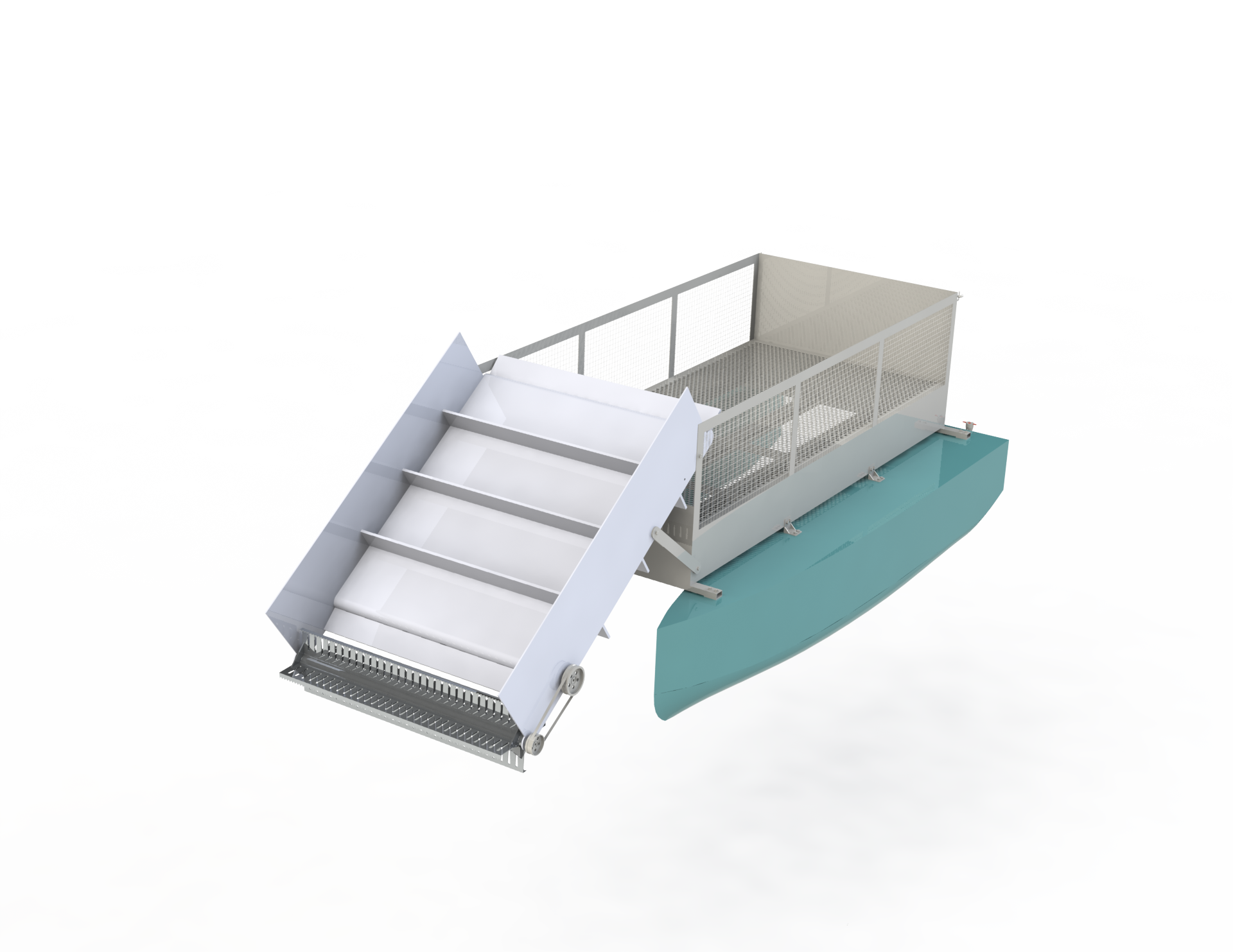
For my capstone project, my team and I designed and fabricated a compact water hyacinth harvesting vessel tailored to operate effectively in the shallow, narrow waters of Waduk Cengklik. To determine the most efficient vessel geometry, i developed and analyzed three distinct hull forms, evaluating their hydrodynamic performance and stability under constrained water conditions. Upon identifying the optimal hull design, together with my team, I executed the physical manufacturing and assembly of a functional 1:3 scale prototype, validating the practical engineering, structural integrity, and maneuverability of the compact design.
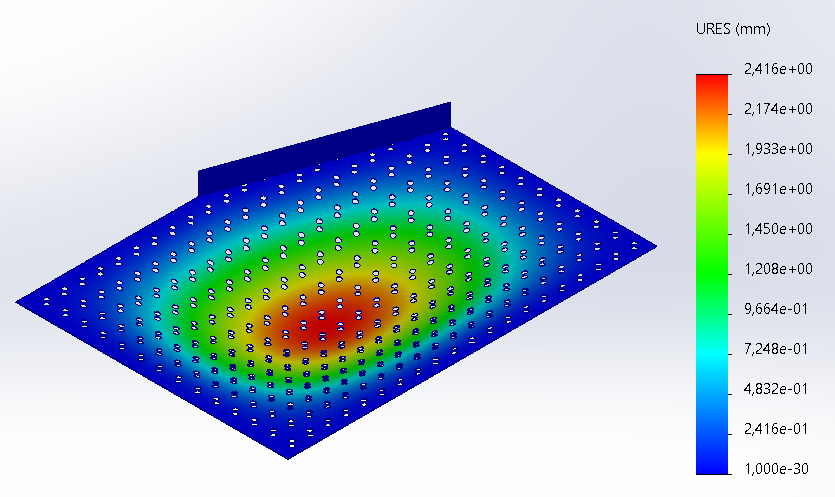
Conducted a structural finite element analysis (FEA) using SolidWorks to evaluate perforated plate designs for coastal waste collection systems. The study evaluated performance across three different material candidates subjected to both uniform and triangular load profiles. By analyzing von Mises stress, displacement, and factor of safety distributions, the project identified the optimal balance between structural rigidity, weight, and material durability under realistic coastal operating conditions.
The details of that explanation will appear here.